What Makes an Early Learning Program Sustainable?
Summary of Insights
Fidelity is key to maximizing the benefits of a curriculum or assessment solution, and fidelity is best sustained through a system based on ongoing coaching. This blog explores how investment in ongoing coaching promotes fidelity by supporting educators, which leads to better outcomes for children.
- Ongoing coaching builds teacher confidence and supports consistent, high-quality implementation of curriculum and assessment solutions.
- Meeting teachers where they are fosters growth without adding unnecessary pressure.
- Ongoing coaching systems strengthen collaboration between teachers and coaches.
- Research shows that aligned systems that include coaching improve teacher retention and well-being and promote positive child outcomes.
Early learning programs invest in high-quality curriculum and assessment solutions to ensure better outcomes for children. But how can early learning programs make sure that their investments will lead to lasting benefits for teachers and children long past the initial implementation?
The key is fostering a focus on fidelity. Fidelity becomes a sustainable goal when school leaders intentionally establish a system of coaching, one based on mentoring and continuous improvement practices. Through this system of support, implementation with fidelity can be achieved not only across multiple classrooms but over multiple school years.
Fidelity and the Key Role of Coaching
What is fidelity, and why is it important? Implementing a solution with fidelity means that the teacher is using the curriculum and assessment resources in the way that the developers intended them to be used, with consistency and accuracy. To obtain the full benefits of a research-based solution, it needs to be implemented according to its design, which makes fidelity an important goal for any high-quality early learning program.
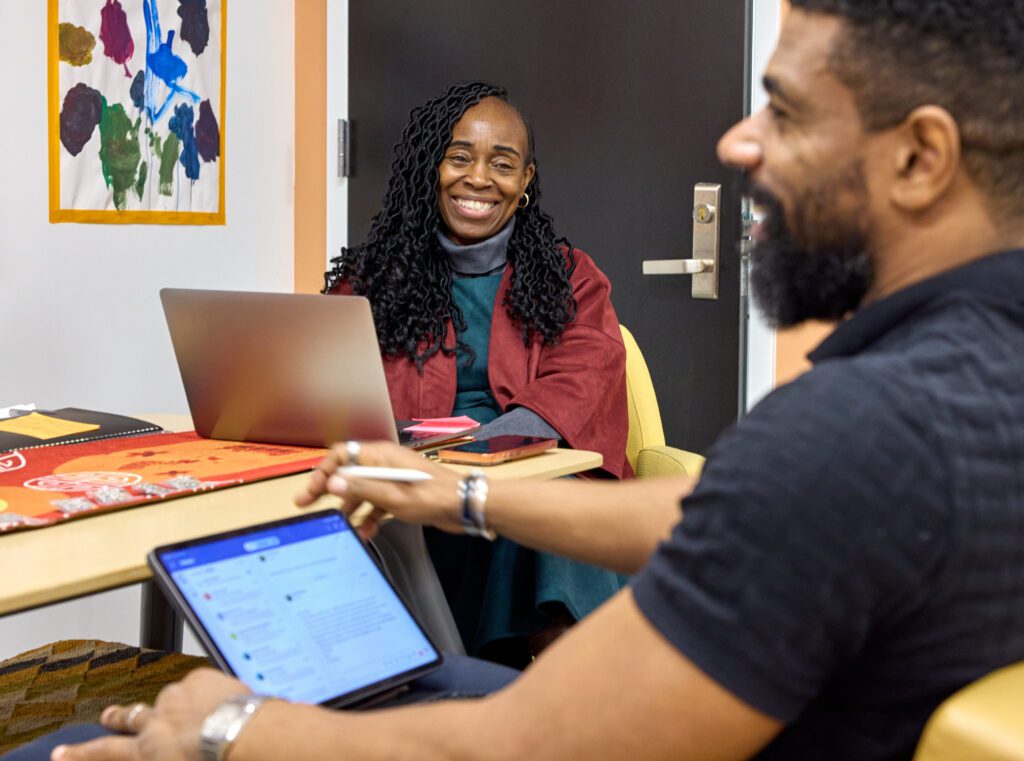
A key component of achieving fidelity is supporting teachers through ongoing coaching. Ongoing coaching is a collaborative process in which teachers and coaches engage in reflective cycles focused on instructional practice. Through this process, teachers receive strategies and guidance that support their growth in implementing curriculum and assessment solutions effectively.
Just as children benefit from teaching that is individualized to their unique strengths and backgrounds, teachers benefit from the individualized support of a coach who is familiar with their teaching history, their school community, and their program’s goals. This relationship then becomes the foundation for sustainable fidelity, as providing continuous support and dedicated time for instructional skill development not only strengthens accurate and consistent implementation but also builds teachers’ confidence and sense of preparedness.
Mentoring Teachers
By approaching coaching as a mentoring relationship rather than a supervisory role or temporary compliance check-in, programs can establish a professional learning community that values continuous professional development, collaboration, and growth.
When programs support teachers with ongoing coaching relationships, they enable coaches to meet each teacher where they are and build on their strengths. Through dedicated time, individualized support, and opportunities for reflection, coaches can help educators of any experience level progress in their journey toward implementing curriculum and assessment with fidelity. This fosters trust and cooperation between coaches and teachers that will help establish fidelity as a long-term, sustainable goal of the program.
Continuous Improvement as a Shared Responsibility
When programs commit to involving teachers and coaches in an ongoing cycle of evaluating, planning, and refining program practices, all stakeholders take ownership and accountability for fidelity, professional growth, and children’s outcomes. This makes it more likely that a focus on fidelity will take root as a sustained program priority. Compared to a single, prescriptive intervention, an ongoing coaching system empowers teachers and coaches to form collaborative partnerships that can focus on fidelity as a long-term goal.
Evidence That Intentional Systems Work
Research demonstrates the importance of ongoing coaching to successful implementation of curriculum and assessment solutions. A 2026 study by the National Institute for Early Education (NIEER) examined the impact of implementing The Creative Curriculum within a fully connected ecosystem1.
The study sought to answer a critical question: “Does implementing The Creative Curriculum within a system that includes aligned live professional development, coaching, and on-demand learning lead to measurable improvements in teacher and child outcomes?”
The findings were clear—the answer is yes.
The Teaching Strategies ecosystem demonstrated measurable impact across
- teacher retention,
- educator well-being,
- classroom practice, and
- children’s developmental outcomes.
These results highlight what strong programs already understand: when coaching, professional learning, and curriculum are intentionally aligned, the impact is both measurable and meaningful.
A Path to Sustainable Fidelity
Fidelity is key to getting the most benefits out of a curriculum or assessment solution, and fidelity is best supported by intentional investment in ongoing coaching. When teachers are supported beyond the initial implementation, systems are aligned for long-term relationships, and commitment to improvement is ongoing, programs do not simply function—they thrive. Most importantly, children benefit from richer, more responsive learning experiences that lay the foundation for lifelong success.
About the Author

Sustainable Program Success Starts With Ongoing Coaching
Support teachers beyond initial implementation with coaching and professional development designed to strengthen fidelity, improve educator confidence, and drive better child outcomes over time.
Citations
- Nores, M., Harmeyer, E. & Barnett, W.S. (2026). Teaching Strategies’ The Creative Curriculum implementation and ecosystem engagement study (CCIEE). Research Report. New Brunswick, NJ: National Institute for Early Education Research.
Frequently Asked Questions
Fidelity refers to how accurately and consistently educators implement a curriculum or teaching practice as it was designed. High fidelity ensures that children receive the full benefits of research-based instruction.
Coaching provides ongoing, job-embedded support that helps teachers reflect, refine their practice, and build confidence. It plays a critical role in improving instructional quality and sustaining program success.
Continuous improvement creates a cycle of reflection, goal setting, and refinement that strengthens teaching practices over time. This leads to better alignment across programs and improved outcomes for both educators and children.
Research shows that when curriculum, professional development, and coaching are intentionally aligned, programs see measurable gains in teacher retention, educator well-being, classroom quality, and children’s development.