Protecting Play in the Early Years: The Heartbeat of Learning

This article originally appeared in the December issue of The Exchange.
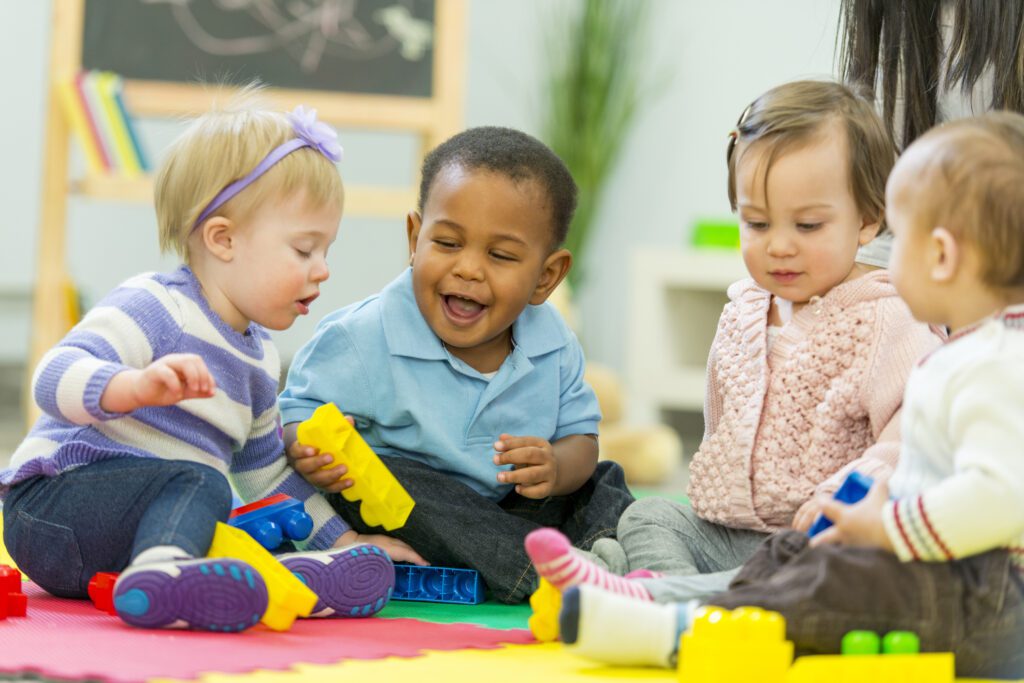
In early childhood education, play has always been the heartbeat of learning. It is how children make sense of the world. It’s how they explore big questions, express their feelings, test out roles, and build relationships. And yet, in recent years, play has come under pressure—from rigid academic expectations, well-intentioned but developmentally inappropriate policies, and the growing demand for children to “show what they know” in ways that often leave out the most essential parts of how they learn.
As someone who has spent my career in early childhood—as a Head Start teacher, program coordinator, state administrator, and now as a leader in early childhood education—I’ve seen how powerful play can be. I’ve also seen how easily it can be misunderstood, undervalued, or squeezed out entirely.
That’s why I believe protecting play is not just a pedagogical decision—it is an honorable one. When we protect play, we protect childhood. We affirm that young children deserve to learn in ways that are joyful, developmentally appropriate, culturally responsive, and grounded in relationships.
Play Is Not a Luxury—It’s the Foundation
The American Academy of Pediatrics calls play “brain building.” Research by Yogman, Hirsh-Pasek, Golinkoff, and others shows that play enhances brain structure and function, promotes executive functioning, and strengthens social-emotional development. In fact, play is one of the best ways for young children to learn how to think creatively, solve problems, and collaborate with others.
But beyond what play teaches, it also shapes how children learn. Children remember what feels joyful and connected. They engage more deeply when they are emotionally safe and intellectually curious. They stretch themselves when the learning is meaningful, relevant, and fun.
When paired with intentional planning and purposeful practice, play becomes a powerful tool for building skills across all domains—language and literacy, mathematics, science, social studies, and the arts. It is through play that children develop both the academic and life skills they need to thrive.
A Nod to Play and the Science of Reading
Too often, the push for literacy “rigor” in the early years has led some to believe that play and evidence-based reading instruction are at odds. They’re not. In fact, they belong together.
The science of reading tells us that becoming a skilled reader requires mastery of foundational components like phonemic awareness, phonics, fluency, vocabulary, and comprehension. But how we teach those components matters just as much as what we teach.
Children build these skills best when instruction is explicit, playful, and embedded in real experiences. Singing, rhyming, storytelling, conversations, and sensory play offer natural, developmentally appropriate ways to help children hear sounds, build vocabulary, and make meaning. These joyful, connected experiences aren’t just a warm-up to the “real” work—they are the real work.
Helping Educators Reclaim Play
One of the most important shifts we can make as a field is to move from seeing play as optional or “extra” to seeing it as essential instruction. But that takes more than belief. It takes support—tools, training, time, and trust.
We must help educators reframe their thinking: that “just play” is not the same as “constructive, meaningful play.” We must equip them with practical strategies to create environments that invite exploration, plan experiences that deepen engagement, and respond to children’s cues with curiosity and care.
We also need to lift up real stories from classrooms—where children are learning to count through cooking, building vocabulary through pretend play, and developing executive function by negotiating who gets the firefighter hat next. These moments may not show up on traditional assessments, but they are the bedrock of lifelong learning.
Balancing Structure with Freedom
Protecting play does not mean abandoning structure. In fact, the most powerful play-based programs are highly intentional. They balance teacher-led, teacher-guided, and child-initiated learning opportunities.
In a high-quality classroom, a child might start the day by signing in with their name card (print awareness), participate in a group song that practices rhyming (phonological awareness), explore a sensory table filled with water and measuring cups (early math), and later act out a story they’ve been reading with friends (comprehension and oral language). None of these experiences are accidental. Each one is carefully designed to build on what the child knows and can do—while allowing space for them to explore, take risks, and lead their own learning.
Our Collective Responsibility
Protecting play is not just the work of individual educators—it’s a responsibility we all share. As curriculum developers, administrators, policymakers, and advocates, we must create systems that value and sustain play.
That means pushing back against policies that expect kindergarten readiness checklists from 3-year-olds. It means investing in professional learning that centers developmentally appropriate practice. It means trusting educators to know their children and to use their professional judgment in creating learning environments that are both joyful and effective.
And it means listening to the voices of those working closest to children—especially those in Head Start, public pre-K, and other programs that serve historically marginalized communities. These educators know better than anyone that play is not a distraction from equity—it is a pathway to it.
The Next Era of Early Learning
As we look to the future, I believe the next era of early learning will be shaped by how courageously we protect what matters most. And play matters. It matters because it honors who children are. It matters because it reflects how children learn. It matters because it connects knowledge to joy.
So let us commit—fiercely and unapologetically—to protecting play. Let us resource it, plan for it, and celebrate it. Let us trust it enough to build our best instruction around it.
Because when we protect play, we protect possibility. And there is no greater gift we can offer the children in our care.
About the Author
Nicol Russell is our Chief Academic Officer here at Teaching Strategies, where she oversees the development of effective implementation and change management solutions for school administrators and early childhood educators who leverage our groundbreaking products.
Nicol has worked as an early childhood teacher, school administrator, Head Start state collaboration director, and state-level administrator for the Arizona Department of Education. Her research interests include studying the implementation practices of early learning programs and considering ways to create more equitable opportunities for all children and educators.
Fun Fact: Nicol has a 10-year-old, and one of their favorite shared activities is singing karaoke!

The Creative Curriculum for Private Child Care
The Creative Curriculum guides and empowers educators of all experience levels to nurture each child’s development with intentional, developmentally appropriate play-based experiences every day.
About Exchange
Exchange Press is committed to supporting early childhood professionals worldwide in their efforts to craft early childhood environments where adults and children thrive – environments that foster friendship, curiosity, self-esteem, joy, and respect; where the talents of all are fully challenged and justly rewarded.
Become part of the exchange of ideas among leaders in early childhood programs worldwide. Exchange Press uplifts the work of early childhood education and care professionals by connecting you with ideas, innovative practices, research, and strategies from inspiring practitioners like you. Our membership options offer an accessible and affordable way to access Exchange articles, video content, live online events and recordings, special offers, and exclusive member content.