Play Doesn’t Sustain Itself: What High-Quality Preschool Leadership Really Takes


Summary of Insights
High-quality play-based learning does not happen on its own. It is the result of intentional leadership decisions that shape how play-based learning is defined, supported, and sustained across a program. Leaders play a critical role in ensuring that play is both meaningful and aligned to strong instructional practices.
- High-quality play-based learning depends on clear leadership decisions about curriculum, assessment, and expectations for teaching and learning.
- Play-based learning is a rigorous, research-aligned approach that supports whole-child development through intentional instruction and meaningful child experiences.
- A shared vision and aligned systems, including curriculum and assessment, help ensure consistency and support teachers in connecting play to learning goals.
- Ongoing professional learning, coaching, and data use are essential for sustaining quality and continuously improving teaching practices and child outcomes.
What Leaders Decide About Learning
Early childhood administrators make countless decisions that shape the daily experience of children, families, and educators. They make decisions about staffing, budgets, schedules, curriculum, assessment, and family engagement. Among the most important of these is a decision that is not always named explicitly: what learning will look like for children. High-quality play-based learning does not happen by chance. It depends on intentional leadership that creates the structures, expectations, and supports for it to thrive.
What Is “High-Quality Play-Based Learning?”
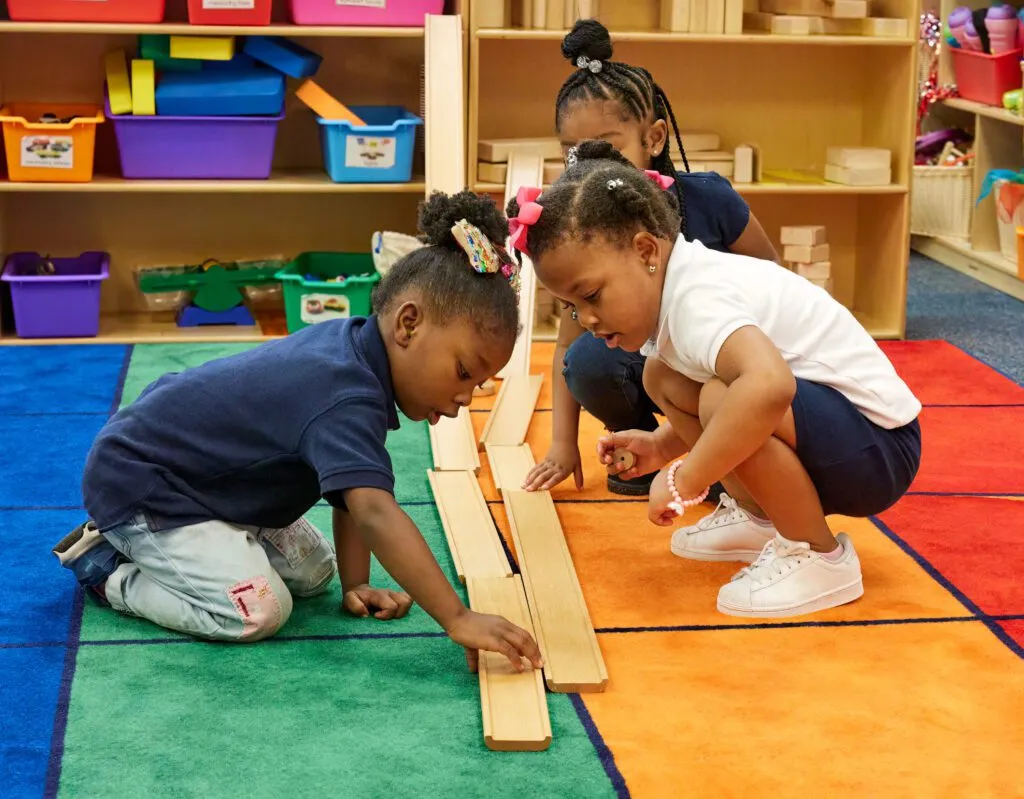
Play is central to how young children learn, think, and build relationships. When children engage in play, they are not “just playing”; they are exploring ideas, constructing knowledge, and developing higher-order thinking skills that form the foundation for later academic success.
Play-based learning is a research-aligned approach to learning that incorporates intentional teaching decisions and guidance to support children’s learning and development. It allows teachers to “maximize learning while individualizing learning goals” for the young children they teach.1 High-quality play-based learning is an approach that meets the needs of the whole child in developmentally appropriate ways.
While children’s choices are at the heart of play-based learning, it is not a “free-for-all” approach that lacks structure or guidance. For play-based learning to be effective, it must include
- intentional facilitation by teachers that connects children’s play to meaningful learning goals.
- clear developmental and academic learning goals aligned to developmental progressions, state standards, and whole-child development; and
- ongoing observation and assessment processes designed to help teachers understand each individual child’s knowledge and skills and determine next steps for learning.
How Can Program Administrators Support High-Quality Play-Based Learning?
1. Start With a Clear Vision
The first step in creating a sustainable, high-quality play-based learning program is to have a clear vision. A clear vision starts with creating a written definition of what play-based learning is in the context of your program. This written philosophy on play-based learning is the “blueprint for the learning environment you create.”2 It should incorporate the values, principles, and expectations that guide the decisions you make for your program, such as your practices regarding hiring, onboarding, classroom expectations, family communication, and resource allocation. It also provides the framing for how you will talk about play-based learning with stakeholders.
2. Develop a Shared Instructional Framework
Vision alone is not enough. Teachers need a shared instructional framework that translates philosophy into daily practice.
In the 2025 Teaching Strategies Teacher Survey, 40% of respondents stated that they had insufficient time for lesson planning, and 36% noted that they wanted more educator materials and guides. Adopting a research-based curriculum that helps teachers embed academic objectives into play-based learning addresses both of those needs. It also demonstrates that play is a purposeful and rigorous approach to learning that supports kindergarten readiness. A high-quality play-based curriculum such as The Creative Curriculum provides a model that can be used to replicate and maintain quality.
Assessment is another component of the shared instructional framework. Adopting a common assessment tool to monitor children’s development and progress across domains can help ensure that children are meeting learning goals and objectives and are prepared for kindergarten. It also provides a common tool for data conversations at both the classroom and program levels.
3. Build Systems That Sustain Quality
High-quality play-based learning requires systems for implementation, reflection, and continuous improvement. Leaders need to collect and use data at the program level, not only to monitor implementation, but also to strengthen teacher practice and improve children’s learning experiences.
Curriculum implementation matters. For any curriculum to be effective, teachers need time, materials, and support to use it well. Implementation and fidelity data can help leaders identify where additional guidance, coaching, or resources are needed. The goal should be teacher growth and confidence, not surveillance or compliance.
Professional learning and coaching are also essential. Ongoing learning opportunities should help teachers deepen their understanding of play-based learning, strengthen facilitation strategies, and connect classroom practice to developmental goals. Coaching can make this work actionable by offering feedback, modeling, and reflection in real classroom contexts. Learning opportunities embedded in curriculum can also strengthen practice. A strong curriculum is one that is flexible and adaptable while also being “educative” for teachers, providing guidance and support on developmentally appropriate and engaging learning environments, materials, and schedules.3
Assessment is another critical part of a quality system. When teachers use observational assessment well, they can make informed instructional decisions that respond to children’s strengths, needs, and interests. At the program level, shared assessment data also help leaders identify trends, support improvement planning, and ensure that children are progressing across domains.
High-quality play-based learning does not happen by accident. It is the result of intentional leadership, clear systems, and sustained support for teachers and families. When leaders protect time for play, align curriculum and assessment, invest in professional learning, and communicate a clear vision, they make it possible for play-based learning to thrive at scale. In that sense, protecting play is not separate from leadership work: it is central to it.
About the Author
Darcy Heath is a Research Manager at Teaching Strategies and a dedicated professional in early childhood education and equity. She brings a strong background in teaching, program management, training, research, and leadership development, with experience working at the intersection of education, equity, and early childhood systems to strengthen the quality and accessibility of services for children, families, and providers. She holds a Master of Early Childhood Education and a Bachelor of Science in Elementary Education from Northern Arizona University, as well as two advanced certifications in instructional development and design from Oregon State University.
What leadership for play-based learning looks like in practice

An education manager includes the program’s play-based learning philosophy in all new staff orientation and revisits it during onboarding coaching conversations.

A director uses classroom observation data to identify where teachers need support in facilitating play.

A leadership team adopts a common curriculum and assessment tool to strengthen continuity across classrooms.

An instructional coach models questioning and scaffolding strategies during center time.

A site leader reviews classroom schedules to reduce pull-outs and interruptions during play blocks.

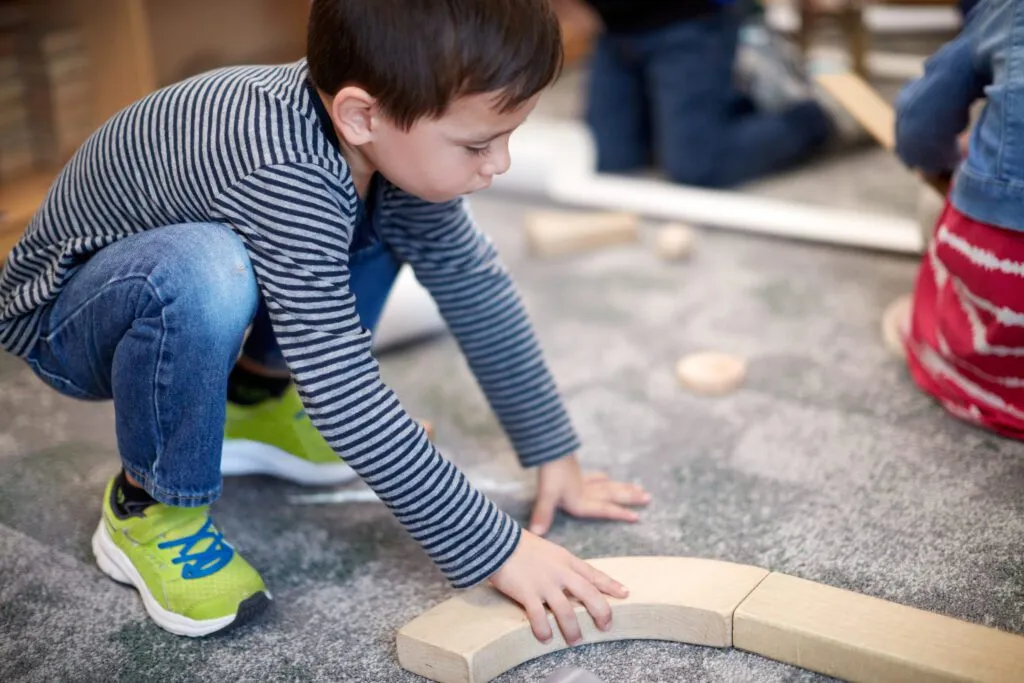
A principal hosts a family night to show how block play, dramatic play, and inquiry support literacy, math, language, and self-regulation.

A preschool director protects 60 to 90 minutes of uninterrupted choice time by revising the daily schedule and reducing transitions.

Lead High-Quality Play-Based Programs with Confidence
Explore how intentional leadership can protect, strengthen, and scale play-based learning across your program while supporting educators and improving outcomes for children.
Frequently Asked Questions
A play-based classroom is evaluated by looking for intentional teaching, clear learning goals, and meaningful child engagement within play. Leaders should also look for evidence of observation, assessment, and teacher facilitation that connects play to developmental outcomes.
High-quality play-based learning looks like children actively exploring, collaborating, and problem-solving with guidance from teachers who connect play to learning goals. It includes structure, intentional facilitation, and ongoing assessment—not just free play.
The best tools for play-based classrooms are those that combine intentional teaching with flexibility, allowing educators to embed learning goals into meaningful play. A research-based curriculum paired with an observational assessment system helps teachers plan, individualize instruction, and track children’s development while maintaining a play-based approach.
Administrators can observe effectively by focusing on how teachers facilitate play, support individual learning, and use interactions to extend thinking. Observation should center on engagement, instructional strategies, and alignment to developmental goals rather than surface-level activity.
Play-based learning is rigorous when it includes clear learning objectives, intentional teaching strategies, and evidence of child growth through assessment. Rigor is reflected in how children think, problem-solve, and apply skills—not just in structured or teacher-led tasks.
Citations
1. Zosh, J.M., Gaudreau, C., Golinkoff, R.M., & Hirsch-Pasek, K. (2022). The power of playful learning in the early childhood setting. (2022). Young Children, 7(2).
2. Kiley, A. (2024). Creating an early childhood learning environment: A reflection of your philosophy. QualitystarsNY.
3. National Academies of Sciences, Engineering, and Medicine. (2024). A new vision for high-quality preschool curriculum. Washington, DC: The National Academies Press.