Two Investment Options for the PDG B–5 SMART Grant
The grant offers two investment pathways to align grant funding with your state’s existing efforts and long-term goals.
Investment Option 1
Technology Infrastructure
For: States needing to build or strengthen infrastructure
To Support: Improvements to statewide data or operational systems, data linkages, dashboards, reporting and analytic tools, or interoperability
In Order To: Collect, connect, analyze, and use information toward a defined goal
Investment Option 2
Innovation Testing
For: States that already have mature technology systems in place
To Support: Implementing, testing, and learning from innovations using their existing data and analytics systems
In Order To: Determine whether the defined strategy is achieving its intended results
The Six Priorities of the PDG B–5 SMART Grant
Recipients must use PDG B-5 SMART Grant funds in alignment with the priorities of the Administration for Children and Families (ACF). Whether adopting Teaching Strategies for the first time or expanding an existing implementation, our solutions can help advance your goals and support educators, children, and families. Click each priority to see how our solutions align.
 Program Integrity & Fiscal Stewardship
Administer funds responsibly through strong internal controls, transparent reporting, and effective oversight.
How Teaching Strategies Supports This Priority
Beyond visibility into child outcomes, leaders need insight into what’s driving successes and how best to address gaps and improve results. Teaching Strategies provides data, reporting, and documentation capabilities that can help administrators connect implementation, program participation, and child outcomes to support accountability, informed decision-making, and oversight.
Relevant Solutions
- GOLD & GOLDFinch
- Professional Development Teacher Membership & Coach Membership
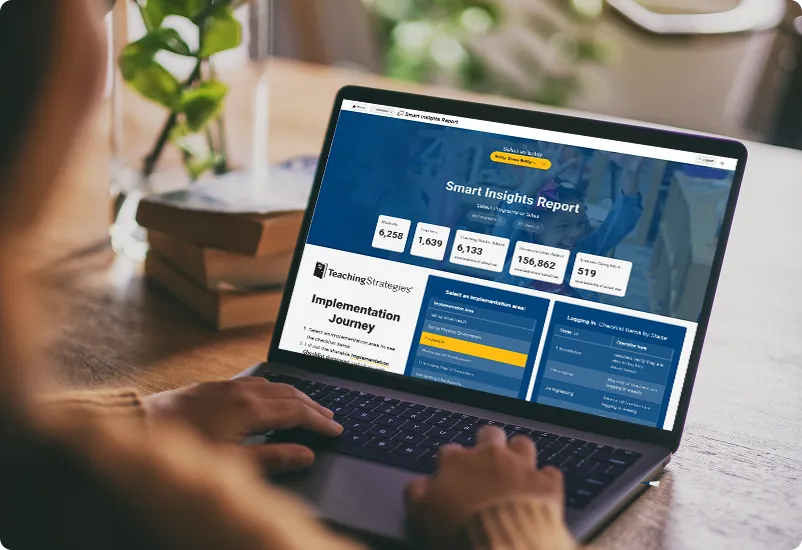
- SmartInsights
 Evidence-Based & Outcome-Focused Practice
Implement evidence-based approaches, establish measurable goals, and continuously improve outcomes.
How Teaching Strategies Supports This Priority
Teaching Strategies combines research-based curriculum, authentic assessment, professional learning, and analytics into a seamlessly connected ecosystem that, in a recent study, demonstrated significant growth for children over time in all areas of development and resulted in higher teacher retention by approximately 59% among those who received Teaching Strategies coaching and professional learning.
Leaders can leverage shared data among the solutions to establish clear benchmarks and strengthen outcomes through strategic coaching, professional development, and implementation improvements.
Relevant Solutions
- The Creative Curriculum
- GOLD & GOLDFinch
- ReadyRosie
- Professional Development Teacher Membership & Coach Membership
- SmartInsights
 Partnership & Local Leadership
Strengthen collaboration across state, local, tribal, territorial, community, and family partners.
How Teaching Strategies Supports This Priority
Teaching Strategies is designed to support consistent, high-quality learning across diverse programs while allowing communities to adapt practices to local needs.
Shared data, common instructional frameworks, bilingual family engagement tools, and professional learning resources help align educators, administrators, coaches, and families around common goals while preserving local flexibility.
Relevant Solutions
- The Creative Curriculum
- GOLD & GOLDFinch
- ReadyRosie
- Professional Development Teacher Membership & Coach Membership
- SmartInsights
 Family Stability & Child Well-Being
Promote healthy child development and strengthen family engagement.
How Teaching Strategies Supports This Priority
Children benefit when families are included as partners in their learning. Teaching Strategies supports meaningful family engagement through research-informed, curriculum-linked, bilingual activities that help families extend the classroom learning at home. Combined with authentic assessment and responsive instruction, educators and families work together to support every child’s growth.
Relevant Solutions
- The Creative Curriculum
- GOLD & GOLDFinch
- ReadyRosie
- Professional Development Teacher Membership & Coach Membership
- SmartInsights
 Workforce Development & Economic Mobility
Strengthen workforce participation through education, professional development, and supportive services.
How Teaching Strategies Supports This Priority
High-quality early childhood systems depend on confident, well-supported educators. Teaching Strategies helps states build educator capacity through ongoing professional learning, coaching, implementation support, and a professional community of over 100,000 early educators. According to a recent RCT study, when using Teaching Strategies’ curriculum, assessment, and professional development together, educators indicated they were 59% more likely to remain in their roles and reported significant gains in well-being.
Relevant Solutions
- Professional Development Teacher Membership & Coach Membership
 High-Quality Early Care & Learning
Expand access to high-quality early childhood education that improves school readiness and lifelong success.
How Teaching Strategies Supports This Priority
Teaching Strategies’ evidence-based ecosystem of early childhood solutions is designed to support whole-child development for every learner, including multilingual learners and children with disabilities. Aligned curriculum and assessment fuel individualized learning experiences that progress with children’s abilities from birth through third grade skills
Combined with educator development to promote fidelity, family engagement to strengthen support at home, and actionable data to inform strategic decision making, Teaching Strategies’ solutions help programs implement consistent, high-quality, developmentally appropriate practices across classrooms, districts, and regions.
Relevant Solutions
- The Creative Curriculum
- GOLD & GOLDFinch
- ReadyRosie
- Professional Development Teacher Membership & Coach Membership
- SmartInsights
Teaching Strategies Priority
Alignment Chart
See how Teaching Strategies solutions support each of the six federal grant priorities in the PDG B-5 SMART Grant.*
*Alignments shown are intended to illustrate how our solutions may support priorities and do not establish grant eligibility, allowability, or compliance.
Advance Your Priorities with Teaching Strategies
Explore solutions that complement your state’s existing investments and help extend their impact across early learning programs.









Frequently Asked Questions
The PDG B-5 SMART Grant is a new, one-year competitive grant opportunity designed to help states make targeted investments in early childhood technology infrastructure and data analytics. Unlike prior PDG planning grants, this opportunity is intended for states that have already completed significant planning and are ready to implement a focused technology or innovation project that produces measurable statewide results within one year.
Applications are due by November 20, 2026, at 11:59 PM ET. Projects are expected to start December 31, 2026.
Each investment must advance one defined state goal and reflect the state’s existing technology infrastructure, analytic capacity, and readiness to carry out the proposed work during the one-year project period. The two investment options are intended for states at different stages of technology and analytic readiness:
- Option 1 will build or strengthen the technology infrastructure needed to collect, connect, analyze, and use information.
- Option 2 will use established technology infrastructure and analytic capacity to implement, test, and learn from a strategy or intervention.
No. The Notice of Funding Opportunity requires choosing either Option 1 (technology infrastructure) or Option 2 (innovation).
It is not intended to replace existing funding or pay an existing expense, however funds can be used to build on and strengthen an existing investment when the proposed work advances the state’s goal and produces results during the project period.
Yes, it can be used to build or strengthen existing investments in early childhood.
- Bolster supply by increasing the availability of high-quality early childhood programs and services in communities where existing options do not adequately meet family needs.
- Build capacity at the state, community, and provider levels so early childhood systems can respond more effectively to changing needs, improve service delivery, and sustain improvements over time.
- Generate efficiencies and supporting reinvestment by identifying opportunities to streamline systems, reduce duplication, coordinate resources, and realize savings that can be redirected toward expanding or improving services for children and families.
- Strengthen linkages across programs and systems, recognizing that stronger coordination, referral pathways, partnerships, and shared infrastructure can improve program quality, family access, and overall system effectiveness.
- Address access and affordability across a broader range of families, including families with low incomes as well as middle-income families who may face significant barriers to accessing affordable, high-quality early childhood programs and services.
Yes, both are required and applicants must be prepared to implement either the technology or innovation priority.
The recipient of this award must implement any funds awarded to effectuate program goals or agency priorities in accordance with the vision, mission, values, priorities, and guiding principles of the Administration for Children and Family (ACF) when authorized. Funded activities must advance ACF’s vision of resilient, safe, healthy, and economically secure children, youth, families, and communities, and support ACF’s mission to foster health and well-being through effective, accountable, and compassionate human services when awarded in any programs that authorize these priorities.
The grant’s funding priorities align with the following values of the Administration for Children and Family (ACF):
- Program integrity and fiscal stewardship: Administer funds in accordance with all applicable federal statutes, regulations, and award conditions; maintain strong internal controls; and prevent waste, fraud, and abuse.
- Evidence-based and outcome-focused practices: Design and deliver services using evidence-based or evidence-informed approaches, establish measurable performance goals, and use data to monitor outcomes and drive continuous improvement.
- Partnership and local leadership: Coordinate with state, tribal, territorial, local, and community partners, as appropriate, and tailor services to meet community identified needs while respecting local decision-making authority.
- Family stability and child well-being: Strengthen families, promote safe and stable home environments, and improve outcomes for children and youth through prevention-focused and developmentally appropriate services.
- Work, self-sufficiency, and economic mobility: Support pathways to employment, job retention, and economic independence for individuals and families, including through workforce development, education, and supportive services.
- High-quality early care and learning: Where applicable, invest in high-quality early childhood programs that support school readiness, healthy development, and long-term success.
The Notice of Funding Opportunity (NOFO) emphasizes the importance of investments that can strengthen areas such as:
- integrating Head Start with other early learning programs,
- strengthening program integrity,
- understanding how children and families are served in the mixed-delivery system, and
- addressing the needs of children involved in child welfare and foster care systems.
Applicants are also required to provide a state match and will receive additional points for coordination with the Governor’s office.