Rethinking Dyslexia: Why the New Definition Matters for Early Childhood


Summary of Insights
The updated definition of dyslexia shifts the focus from delayed identification to early understanding and support. This blog explores how the dyslexia definition has changed and how early childhood educators and leaders can recognize risk sooner and respond with instruction that builds strong literacy foundations.
A New Approach to Understanding Dyslexia in Early Childhood
Dyslexia is often discussed once children begin to struggle with reading. The updated definition, however, asks us to think differently—earlier, more precisely, and more preventively.
What is the difference between the new and old definitions of dyslexia?
According to the most current understanding, dyslexia is a specific learning disability characterized by difficulties in word reading and spelling—affecting accuracy, speed, or both. These challenges exist along a continuum; persist even with effective instruction; and are shaped by a combination of genetic, neurobiological, and environmental influences. Importantly, while phonological processing difficulties are common, they are not universal; challenges may also involve morphological processing, or how children understand meaningful parts of words.
This reflects a shift from earlier definitions that often relied on discrepancy models or positioned dyslexia as something identified after a child had already fallen behind. The newer definition is more comprehensive. It emphasizes word-level reading, recognizes multiple contributing factors, and highlights early oral language weaknesses as important indicators. Just as significantly, it underscores the importance of early language and literacy support—not as remediation, but as a proactive approach.
That shift has direct implications for early childhood education.
Can dyslexia be identified in preschool?
While formal diagnosis typically occurs later, risk for dyslexia can be identified as early as preschool. Children may show signs such as delayed speech, difficulty with rhyming, trouble identifying or producing sounds in words, or challenges learning letter names and sounds. Developmentally appropriate screeners like Teaching Strategies’ Finch literacy screener can serve as early warning systems for potential challenges and provide the data needed to determine how best to support children.
Weaknesses in oral language—often overlooked—can foreshadow later literacy difficulties. These early indicators matter because reading development follows a predictable path: when foundational skills are not in place, challenges tend to compound over time. Early identification, however, is not about labeling. It is about responding.
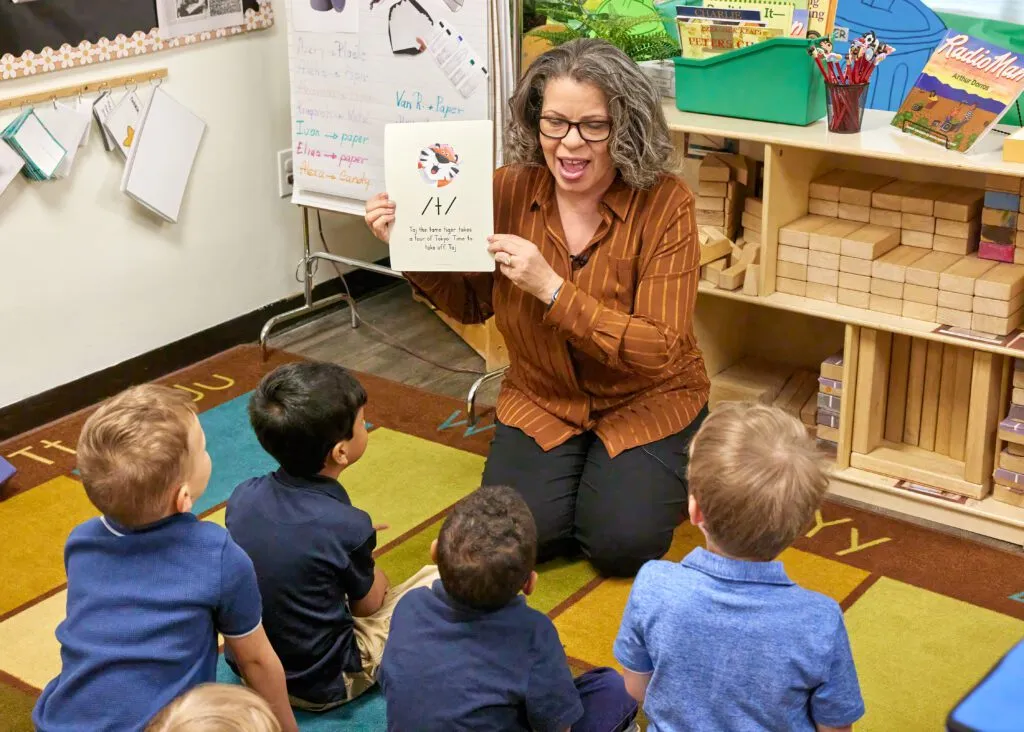
Effective early instruction for children at risk for dyslexia is not separate from good teaching—it is good teaching. Young learners benefit from instruction that is explicit, systematic, and cumulative. This includes clearly teaching letter–sound relationships, providing structured opportunities for practice and review, and intentionally building connections across skills over time. Phonological awareness—the ability to hear and manipulate sounds in words—remains central, and it is further strengthened when paired with rich oral language experiences and attention to how words carry meaning.
These approaches are often described as structured literacy. In early childhood, this means intentionally building the foundations of language—sound, symbol, and meaning—in ways that are clear, connected, and responsive to children’s development. Importantly, this is not at odds with play-based, developmentally appropriate, and engaging learning experiences. The perceived divide between structured instruction and joyful, meaningful learning is a false one. Both can—and should—coexist. When thoughtfully integrated, these approaches support all learners while providing essential access for those at risk for dyslexia.
What should early childhood leaders do about dyslexia?
For leaders, the implications are practical. Early childhood systems should prioritize screening that identifies risk—not to diagnose, but to guide instruction. Professional learning should deepen educators’ understanding of language development, including phonological and morphological processes. Curriculum and assessment should align with evidence-based practices, and systems such as multi-tiered systems of support (MTSS) should ensure that support is responsive and timely.
Perhaps most importantly, leaders and educators together can shift the narrative with families. Dyslexia is not a reflection of intelligence or effort. It is a common, brain-based difference in how children learn to read and write—and with early, targeted support, children can and do succeed.
The updated definition of dyslexia moves the field away from waiting for failure and toward building strong foundations from the start. For early childhood education, that is not a small change. It is an invitation to see prevention, not remediation, as the central work.
About the Author
Nicol Russell is our Chief Academic Officer here at Teaching Strategies, where she oversees the development of effective implementation and change management solutions for school administrators and early childhood educators who leverage our groundbreaking products. She has worked as an early childhood teacher, school administrator, Head Start state collaboration director, and state-level administrator for the Arizona Department of Education. Her research interests include studying the implementation practices of early learning programs and considering ways to create more equitable opportunities for all children and educators.
Fun Fact: Nicol has a 10-year-old, and one of their favorite shared activities is singing karaoke!

Plant the Seeds for Reading Success With Kickstart Literacy
Engage children in exciting play- and science of reading-based lessons focusing on phonemic awareness, phonics, and vocabulary with our new literacy curriculum.