What Literacy Leaders Should Protect: Creating the Conditions Where Reading Begins

Summary of Insights:
Strong literacy instruction includes more than teaching children to decode words. Meaningful conversations, joyful learning, and rich interactions help children build the oral language, background knowledge, and critical thinking skills that make reading meaningful.
Reading Begins With Meaningful Conversations
If I asked a room full of educators what children need to become successful readers, I suspect I’d hear many of the same responses: phonological awareness, letter knowledge, decoding, vocabulary, and fluency. They would all be right.
But they would also be describing only part of the story.
Over the past several decades, our understanding of the science of reading has helped educators strengthen foundational literacy instruction in important ways. Those advances have benefited children, and they deserve our continued attention. Yet as we work to ensure that every child learns to read, we must be careful not to lose sight of an equally important truth: the goal of literacy is not to simply read words accurately. The goal is to make meaning.
In a recent webinar with Dr. Kathy Hirsh-Pasek, I had the pleasure of talking about the importance of conversations for building background knowledge. She told stories of observations she has made in early learning classrooms, as well as of young children in her family. I told stories about classrooms I have been in, as well as of my young daughter and her best friend.
These stories were not about children’s foundational skills; they were stories that reflected their interests and how they inspired conversations. Stories that reflected the children’s critical thinking—stories that helped us, the adults, understand how they were understanding the world around them.
This is the goal of literacy. How do we not lose sight of that as we continue to teach children the technical literacy skills they need?
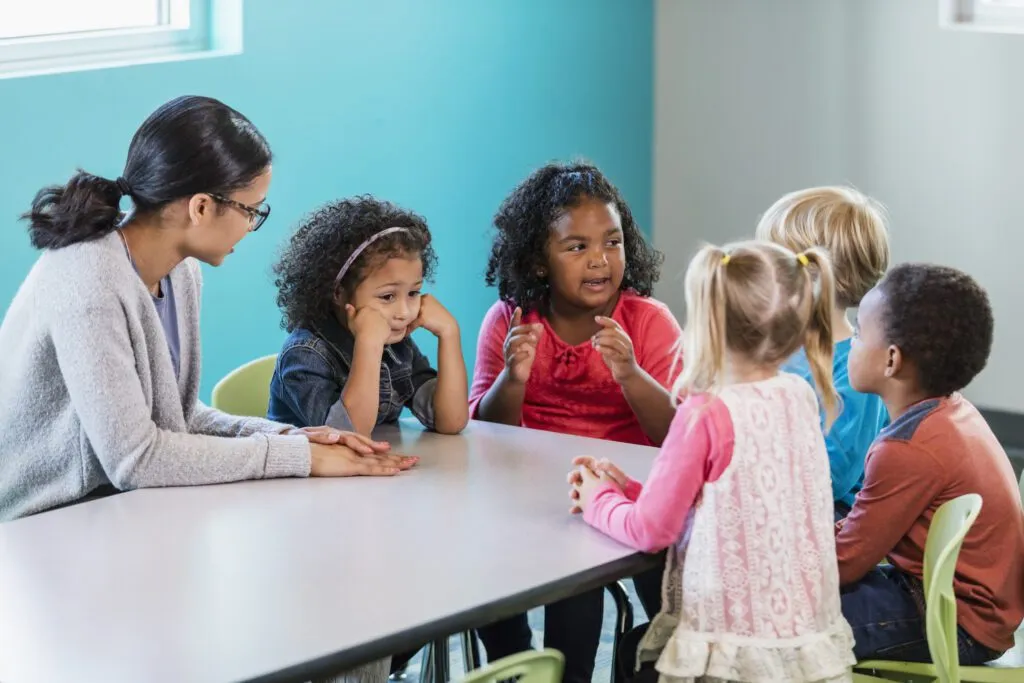
Long before children decode their first sentence, they are already developing the skills that make comprehension possible. They are listening to stories, asking questions, negotiating with peers, explaining their thinking, and making sense of the world through conversation. These experiences are not separate from literacy. They are literacy’s foundation.
For educational leaders, this raises an important question. If oral language is the foundation of reading, what are we doing to protect the conditions in which it develops?
We Have a Leadership Opportunity
Today’s classrooms face tremendous pressure. Teachers are expected to cover increasingly rigorous standards, administer assessments, monitor progress, and maintain instructional pacing. These expectations are rooted in a shared commitment to helping children succeed, but they can unintentionally narrow the very experiences that fuel literacy development.
When every minute feels scripted, opportunities for authentic conversation often become the first casualty. Children still answer questions, but they have fewer opportunities to ask their own. They complete literacy activities but spend less time wondering, imagining, debating, and building ideas together. The irony is that these rich language experiences are too often treated as distractions from literacy instruction, when, in fact, they strengthen it.
Research consistently reminds us that oral language development supports vocabulary growth, comprehension, executive function, and social understanding—all capacities that predict later literacy success.
As leaders, our responsibility extends beyond ensuring that high-quality literacy instruction is taking place. We must also ensure that classrooms remain places where meaningful conversation can thrive.
The False Choice We Must Leave Behind
Too often, discussions about literacy become framed as competing priorities.
Should classrooms focus on foundational skills or conversation? Direct instruction or play? Academic rigor or joyful learning? These are false choices.
Children need explicit instruction in foundational reading skills. They also need abundant opportunities to use language for authentic purposes. In fact, these experiences are most powerful when they work together.
As we discussed during our recent webinar, it isn’t skills or conversation. It’s skills through conversation.
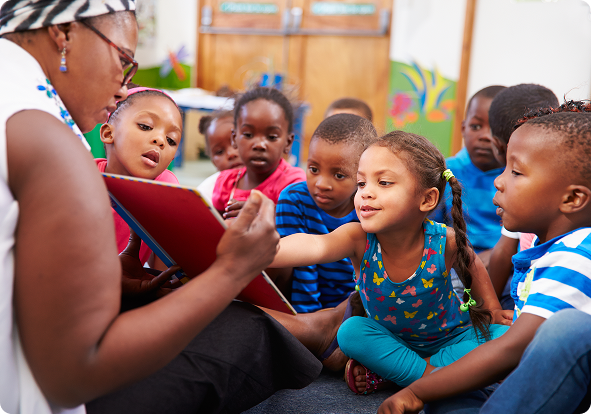
When children discuss a story during a read-aloud, negotiate roles during dramatic play, explain their reasoning while solving a problem, or invent a new game on the playground, they are developing vocabulary, comprehension, perspective-taking, and reasoning alongside foundational literacy skills.
Language gives purpose to literacy. Literacy gives power to language. Our job is not to choose between them. It is to create learning environments where they naturally reinforce one another.
Protect the Interactions That Matter Most
One of the most important decisions leaders make is not about curriculum. It is about culture. Do teachers feel they have permission to linger with a child’s question? Can they pause to follow an unexpected conversation? Do classroom schedules allow children time to tell stories, negotiate ideas, and solve problems together?
These moments may not always appear on a pacing guide, but they are often where the deepest learning occurs.
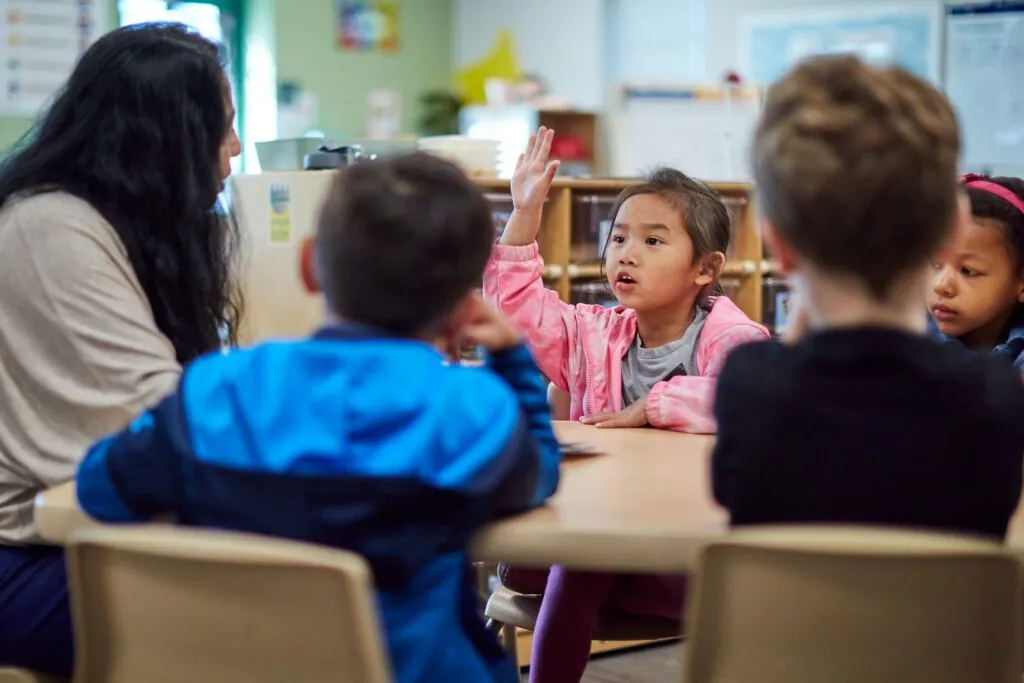
Quality interactions matter more than isolated skill practice because language develops in relationships. Children build understanding when adults extend their thinking, ask open-ended questions, encourage them to explain their ideas, and genuinely listen to their responses.
These interactions cannot be reduced to a checklist. They require professional judgment, intentionality, and trust. That is why leadership matters when it comes to protecting children’s authentic opportunities to develop their language.
When leaders prioritize instructional coaching that focuses on interactions—not simply implementation—they communicate that relationships and conversation are essential components of excellent teaching. Knowing that they have their leaders’ support then makes it easier for teachers to navigate those false choices to ensure children are learning literacy and language.
Joy and Learning Belong Together
Perhaps the most persistent misconception in early childhood education is that joyful learning somehow competes with academic achievement. In reality, joy creates the conditions in which learning flourishes.
Play provides authentic opportunities for children to predict, explain, negotiate, imagine, and tell stories. Conversation transforms these moments into powerful language experiences. And I am a firm believer that children are far more likely to remember ideas they have discussed than answers they have simply repeated.
When classrooms are filled with curiosity, storytelling, and meaningful dialogue, literacy is not postponed until “reading time.” It becomes woven throughout the day.
Play does not interrupt literacy; play builds literacy.
A Different Question for Leaders
As educational leaders, we often ask whether children are getting enough literacy instruction. That remains an important question. But perhaps we should also ask ourselves something else.
- Who does most of the talking in our classrooms?
- When do children have opportunities to wonder aloud?
- Where do authentic conversations naturally emerge?
- What conversations might we be unintentionally rushing?
The answers to these questions reveal far more than classroom management or instructional style. They reveal the kinds of thinkers, communicators, and readers we are helping children become.
Reading begins long before children decode words. It begins when children discover that language helps them express ideas, connect with others, and make sense of the world around them. As leaders, we have the privilege—and the responsibility—to protect those moments.
Because when we protect meaningful conversation, intentional interactions, and joyful learning, we are not stepping away from literacy instruction. We are strengthening the very foundation upon which lifelong reading is built.
About the Author
Nicol Russell is our Chief Academic Officer here at Teaching Strategies, where she oversees the development of effective implementation and change management solutions for school administrators and early childhood educators who leverage our groundbreaking products. She has worked as an early childhood teacher, school administrator, Head Start state collaboration director, and state-level administrator for the Arizona Department of Education. Her research interests include studying the implementation practices of early learning programs and considering ways to create more equitable opportunities for all children and educators.
Fun Fact: Nicol has a 10-year-old, and one of their favorite shared activities is singing karaoke!

Build Strong Literacy Foundations With Confidence
Discover how Kickstart Literacy provides focused, research-based instruction that strengthens phonological awareness, phonics, and early writing while fitting seamlessly into your daily classroom routine.
Related Resources
Frequently Asked Questions
Long before children learn to decode words, they are building the language, background knowledge, and critical thinking skills that support reading comprehension. Through conversations, play, and meaningful experiences, children develop vocabulary, learn to express their ideas, and make sense of the world, creating the strong foundation they need for lifelong literacy.
Play creates authentic opportunities for children to ask questions, tell stories, negotiate with peers, and explain their thinking. These rich language experiences strengthen oral language, vocabulary, comprehension, and social understanding while making literacy engaging, meaningful, and connected to children’s everyday experiences.
Literacy development begins long before children read their first words. From infancy through the early years, children build literacy skills by listening to stories, engaging in conversations, asking questions, and interacting with caring adults who help them develop language and understand the world around them.
Teachers build vocabulary by creating space for meaningful conversations throughout the day, not just during literacy lessons. Asking open-ended questions, encouraging children to explain their thinking, extending conversations during play, and connecting new words to children’s experiences all help deepen language development and support later reading success.