Mixed-Age Preschool Classrooms: Design, Individualization, and Instruction Strategies That Scale

Summary of Insights
Mixed-age preschool classrooms offer unique opportunities for engagement, continuity of care, and individualized instruction. Programs succeed with this model when leaders prioritize
- thoughtful classroom design that supports supervision, safety, and choice;
- interest areas stocked with tiered materials that invite exploration for all developmental levels;
- daily routines and instructional practices that promote responsive teaching and flexible small-group work; and
- professional learning and assessment tools that empower teachers to individualize learning for every child.
Across the country, early childhood programs are finding creative ways to balance quality, engagement, and efficiency. As programs search for models that adapt to shifting enrollment patterns and support strong relationships, many leaders are reconsidering how to organize classrooms most effectively. One increasingly common approach is the mixed-age preschool classroom, where three-, four-, and five-year-olds learn and grow together in the same environment.
While some leaders adopt mixed-age groupings to address staffing or space challenges, the most successful programs see them as something much more powerful: an opportunity to strengthen relationships, support individualized instruction, and create richer learning communities for children and teachers alike.
This model isn’t without its challenges, but with intentional design and responsive teaching, mixed-age classrooms can deliver exceptional outcomes for both children and programs.
The Environment as the Foundation
For leaders, the classroom environment is the foundation of instructional quality. A thoughtfully organized space doesn’t just make supervision easier; it enables teachers to implement developmentally appropriate practice, effectively manage small groups, and individualize learning for children at different stages of development.
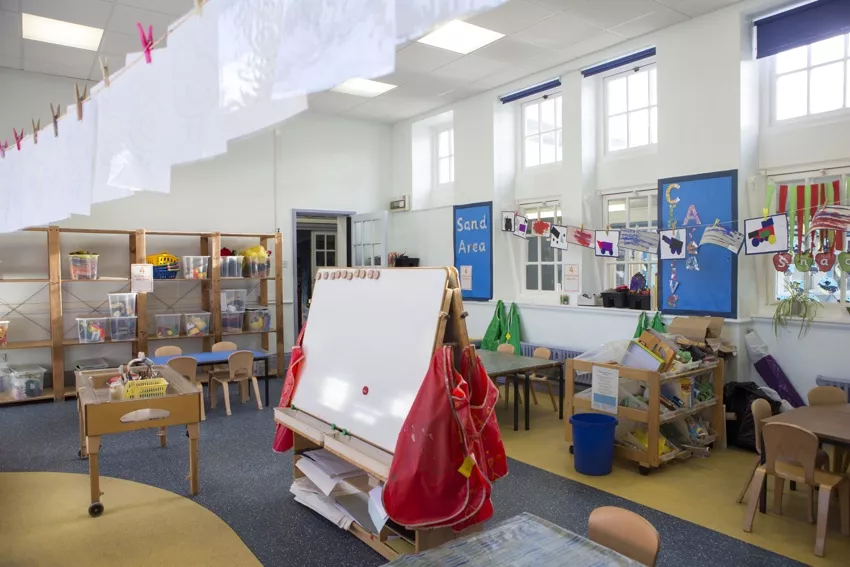
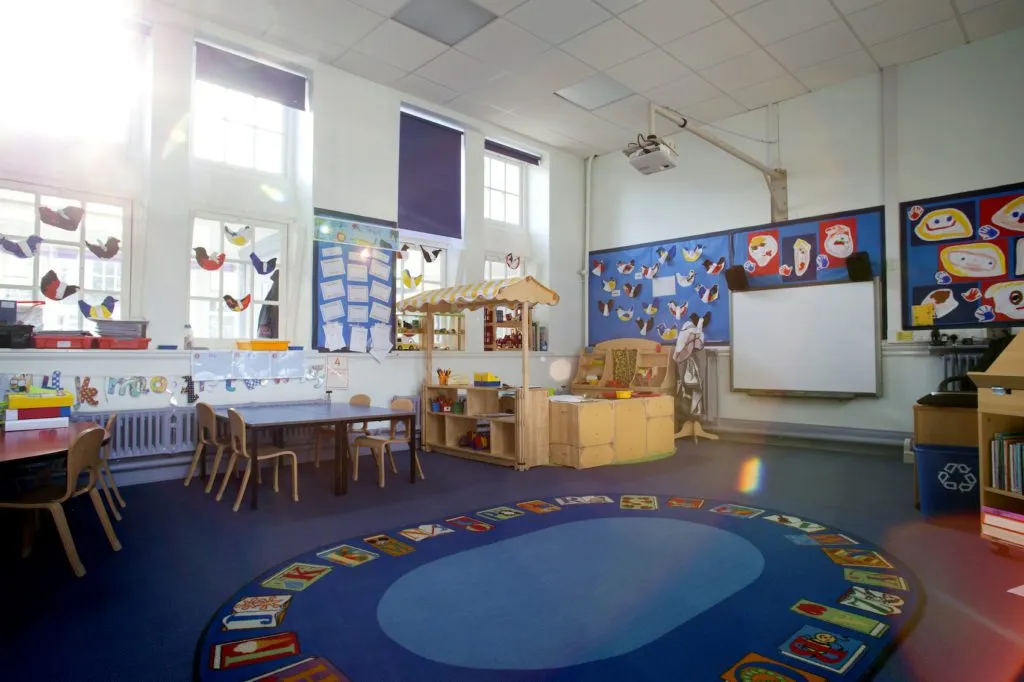
A thoughtfully arranged mixed-age environment offers clearly defined quiet and active areas, open sightlines, and logical traffic flow so children can move independently while teachers maintain visibility. Materials are chosen and according to the by developmental needs of the children in the classroom, with larger, simpler manipulatives for younger learners and more complex tools for older children.
When the space works well, teachers spend less time on logistics and more time connecting, observing, and guiding.
Once, while working with a Head Start classroom, I observed as the lead teacher realized that the daily schedule would have to be quickly adjusted due to unexpected weather—outdoor time would have to take place in indoors. A shelf in the Block area was rolled into a new area to create more space, and children migrated to the new setup, where they had step-by-step instruction cards of various levels to engage in an independent activity. In another part of the classroom, children had access to open-ended material to explore while the teacher worked with other children on literacy skills.
With their knowledge of the different developmental needs of the children in the classroom, the teacher was able to quickly pivot from the planned activity and provide additional support to children who needed it. Cleanup was quick and effective even for the youngest children because bins were labeled with images, so the new activities did not disrupt the rest of the classroom schedule. Because the environment was designed to support responsive, individualized teaching, it was able to act as a foundation for the teacher’s high-quality instruction, even when individual parts needed to shift.
Interest Areas That Invite Every Learner In
An effective mixed-age classroom is built around flexible, engaging interest areas that encourage exploration for children at many levels. In a The Creative Curriculum classroom, the 10 interest areas—Blocks, Dramatic Play, Toys and Games, Art, Library, Discovery, Sand and Water, Music and Movement, Cooking, and Technology (plus the outdoors)—provide the structure teachers need while still allowing children freedom of choice.
Each area can be tiered to support different developmental needs. In the Block area, for example, younger children may explore hollow blocks for large-motor play while older children plan elaborate constructions with unit blocks and props. In the Dramatic Play area, a familiar home-center setup can evolve into a grocery store or doctor’s office, offering natural opportunities for language development and collaboration.
Labels, picture cues, and consistent organization allow every child, regardless of age or first language, to navigate the space independently. When interest areas are designed intentionally, the environment itself becomes a built-in tool for individualization.
Creating a Culture of Care and Continuity
The physical classroom setup is only half the story. A high-quality preschool environment is equally defined by its routines, relationships, and emotional climate. Predictable daily rhythms give younger children the security they need, while older children build autonomy and leadership.
Materials and displays that reflect children’s languages and cultures signal that everyone belongs. Also, because mixed-age classrooms often allow children to remain with the same teachers for multiple years, they naturally support continuity of care, a proven driver of strong attachment and positive learning outcomes.
For administrators, these aren’t simply environmental details. They’re strategic decisions that nurture stability for families and staff alike, directly influencing teacher retention and family satisfaction.
Features of a Mixed-Age Classroom That Make Flexibility Possible
The most effective mixed-age classrooms include features that help teachers adapt on the fly.
- Flexible classroom layouts that include defined areas that can be expanded or reduced, furniture that can easily be moved, and mobile interest areas that will allow for quick transitions between whole-group, small-group and independent discovery activities
- Open-ended learning materials for activities that can be scaffolded without much change in the setup, along with visuals showing step-by-step instructions
- Clearly labeled and accessible storage for children to manage independently, allowing for more time spent on teacher-child engagement
- Visual daily schedules that allow for flexibility, including moveable trackers and larger blocks of time for child-led activities
- Consistent classroom routines and management for reduced behaviors and self-regulation supports
- Clear snapshot of children’s growth and development, enabling teachers to make real-time adjustments to support individual needs
When these features are built in, teachers can adjust activities and expectations seamlessly throughout the day—without interrupting the natural rhythm of learning.
A Classroom Environment That Maximizes Instruction
The beauty of a well-planned space is that it allows instruction to become dynamic. Teachers in mixed-age classrooms can rotate through small groups based on readiness or interest rather than age. Older children naturally model language and problem-solving for younger peers, while teachers scaffold understanding in real time. “Choice time” becomes intentional teaching time, a chance to expand learning through children’s individual interests, extend vocabulary, or introduce new concepts through play.
To make this work, leaders must provide the right supports.
- A Flexible, whole-child curriculum (such as The Creative Curriculum) that offers guidance for interest-area learning and small-group planning
- Ongoing professional development focused on facilitation, observation, and promoting children’s language and communication skills.
- Embedded assessment tools (like GOLD) that make it easy for teachers to capture evidence of growth and plan next steps.
When administrators invest in these systems, they make individualization achievable every day, for every teacher.
Individualization at the Heart of Mixed-Age Learning
Individualization is the heartbeat of a successful mixed-age classroom. It’s what transforms shared experiences into personalized growth.
In early childhood settings, individualization isn’t about rigid levels or separate lesson plans. It’s about responsive teaching—adapting materials, interactions, and expectations to meet each child’s developmental stage and interests.
Because children learn in community, mixed-age classrooms naturally invite individualization.
- Through the environment, with open-ended materials that offer multiple entry points
- Through grouping, with flexible small groups formed around skills or interests
- Through interaction, as teachers vary questions and prompts to meet learners where they are
- Through assessment, using ongoing observation to plan meaningful next steps
This continuous cycle—observe, plan, teach, reflect—ensures that each child moves forward at their own pace within a shared classroom community.
Why Individualization Matters for Leaders
For administrators, individualization isn’t just a classroom practice—it’s a leadership strategy. Programs that prioritize individualization see gains far beyond the child-level outcomes.
- Instructional quality and equity rise across classrooms.
- Teachers report greater confidence and lower burnout.
- Programs more easily meet state performance standards, CLASS™, and QRIS indicators that emphasize responsive interactions.
By equipping teachers with the right tools and training, leaders can scale quality without sacrificing relationships or joy in the classroom.
What the Research Says
A growing body of research confirms what many experienced educators already know: when quality teaching and intentional individualization are present, mixed-age classrooms perform as well as—or better than—single-age settings.
Studies highlight key benefits.
- Younger children develop stronger language and self-regulation skills through peer modeling.1,2
- Older children strengthen their empathy, leadership, and collaboration skills.3
Intentionality is the variable that matters most. With a strong curriculum, robust assessment, and sustained coaching, mixed-age classrooms can become some of the most inclusive and effective environments in early learning.
By combining thoughtful design, individualized teaching, and a deep respect for children’s developmental diversity, mixed-age preschool classrooms bring the principles of developmentally appropriate practice to life, for every learner, every day.
About the Author
Jenika Carmouche has devoted the past 15 years to early childhood education. Jenika began her career as a teacher in the Head Start classroom. After spending a few years in the classroom, her commitment to continuous growth and professional development led her to pursue a master’s degree in early childhood education and transitioned into the role of an education coach, then EHS/HS Center Administrator in the Houston area. Currently, Jenika works as an educational consultant for Teaching Strategies delivering professional development and instructional coaching to educators. Her goal is to nurture a lifelong love for early learning while upholding best practices. Fun fact I still haven’t learned to use chopsticks, so many people have tried to teach me, and I still request the helpers when I go for ramen or sushi.
See how The Creative Curriculum for Preschool supports mixed-age classrooms with flexible interest-area guidance, differentiated small-group plans, and embedded assessment to support every learner.
References
- Vygotsky, L. S. (1978). Mind in society: The development of higher psychological processes. Harvard University Press.
- Katz, L. G., Evangelou, D., & Hartman, J. A. (1990). The case for mixed-age grouping in early education. National Association for the Education of Young Children.
- Katz, L. G. (1995). The benefits of mixed-age grouping (Report No ED382411). ERIC. files.eric.ed.gov
Frequently Asked Questions
A mixed-age preschool classroom intentionally serves three- to five-year-olds together, using the environment, the materials, and instruction designed for a range of developmental levels.
Through small-group rotations, tiered materials, and responsive interactions grounded in ongoing observation.
Yes. When supported by intentional planning and professional learning, they demonstrate equal or greater gains in language, social skills, and engagement.
Key features of a mixed-age preschool classroom include defined locations for specific learning experiences (e.g., interest areas), open-ended materials, flexible groupings, documentation strategies, and routines that balance structure with choice.