When Children Want to Be Here: How Joyful Classrooms Build Attendance Habits


Key Insights
- Chronic absenteeism begins as early as preschool. Missing 10% or more of school days can establish attendance patterns that persist into elementary school and beyond.
- Preschool attendance shapes long-term school engagement. The routines and beliefs children and families form in early learning programs influence academic success and attitudes toward school for years to come.
- Attendance is not just a compliance issue—it is a relationship and engagement issue. Strong teacher–child relationships and authentic family partnerships are critical drivers of consistent attendance.
- Joyful, play-based, developmentally appropriate classrooms increase attendance. When children feel safe, valued, and excited to learn, they are more motivated to return each day.
- Attendance is a reflection of belonging and trust. When families experience school as a place of growth, connection, and meaningful
“What’s the most effective lever we have in preschool to improve attendance long-term?”
Before coming to Teaching Strategies, I was an administrator in a state early childhood program. I often found myself in conversations with district leaders about an issue many seemed to deal with frequently: chronic absenteeism. The tone of these meetings was serious, as it should be. We looked at slides filled with data that showed trend lines on the downward slope, indicating attendance rates were declining. Red arrows. Percentages that refused to budge in a positive direction.
In one of those meetings, someone asked, “What’s the most effective lever we have in preschool to improve attendance long-term?” It was a reasonable question. With enough well-meaning, smart, experienced folks in the room, surely, we could come up with some ideas. And that we did. Idea after idea was documented and went into our strategic planning. Now, almost 10 years later, I’m reflecting on those conversations because chronic absenteeism continues to be an important issue in our field. With these many more years of experience, I’m wondering if we might be aiming at the wrong target.
What is chronic absenteeism?
Chronic absenteeism is defined by the US Department of Education as missing 10% (or more) of school; this is equivalent to about one day every two weeks. Nationwide, about 30% of students are chronically absent from school.
Why should we focus on combatting chronic absenteeism in preschool?
When talking about absenteeism in early childhood education, we often hear “It’s just preschool, they don’t need to be there every day.” However, regular attendance in preschool builds routines in which children thrive and forms habits that may last a lifetime. When schools and districts partner with families on attendance in the early years, they will see value in their livesfor years to come.
Attendance is about more than compliance
Attendance is often framed as a compliance issue. Are families meeting requirements to have their children in school for a certain number of hours and days? Are programs monitoring consistently so they can encourage families when they are not meeting requirements? Are policies reflective of what families and programs need?
From my vantage point as Chief Academic Officer at Teaching Strategies, I see something different in the data and in the field. I don’t think attendance in early childhood is a compliance problem. I think what we have is a relationship and engagement issue.
And at its core, that issue is about joy.
How do engagement and joy affect attendance rates?
I believe, wholeheartedly, that children return to places and people they love.
This is not a poetic exaggeration; it is a developmental truth. Young children are wired for attachment and emotional resonance. Their brains are constantly scanning for cues: “Am I safe here? Am I seen? Does this feel good?”
When learning is joyful—when it is filled with movement, laughter, discovery, storytelling, and genuine delight—children associate learning and the experience of “school” with positive emotion. And positive emotion strengthens memory, motivation, and persistence. Neuroscience tells us that experiences infused with joy activate systems in the brain that deepen learning and reinforce approach behaviors. In simple terms, children move toward what feels meaningful and rewarding. They ask to go back.
We know from national research that chronic absenteeism can begin as early as preschool and kindergarten. Patterns formed in the first years of schooling often persist into later grades. A child who is frequently absent in early learning is more likely to struggle academically in third grade and beyond. But attendance habits do not emerge in a vacuum. They are shaped by first impressions.
Lasting impressions
For many families, early childhood programs are their first sustained experience with “school.” In those first weeks and months, families are forming judgments—sometimes consciously, often intuitively—about whether this is a place where their children are known, valued, and thriving.
Children are forming judgments, too.
Is this a place where my ideas matter?
Is this a place where I get to explore?
Is this a place where adults delight in me? Yes, children wonder if the adults caring for and teaching them like them!
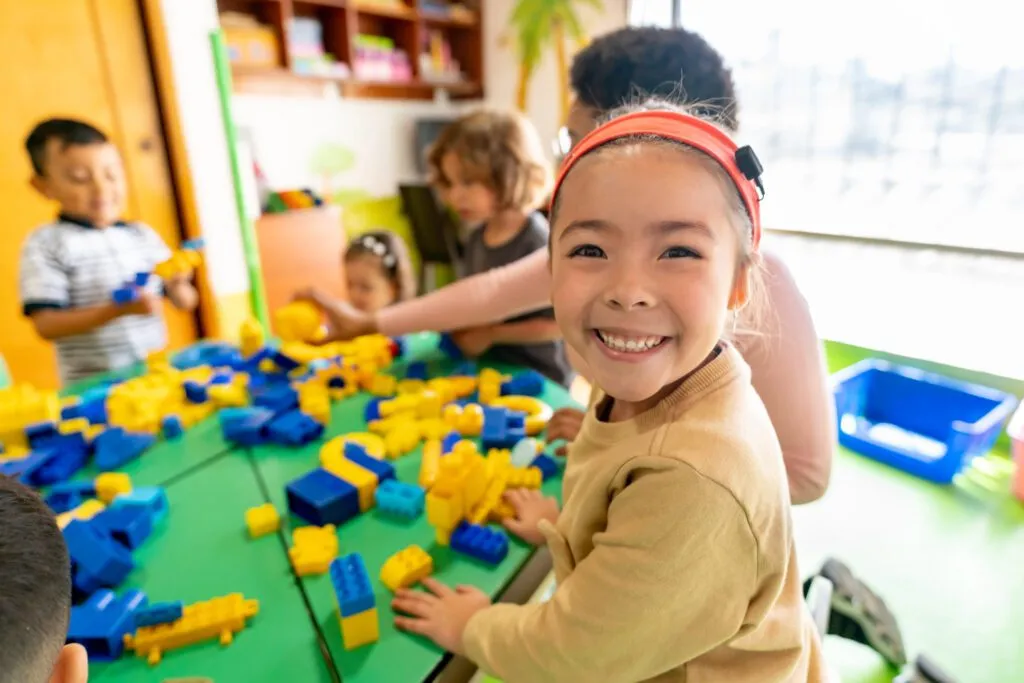
When classrooms are developmentally appropriate and play-based—when children are building intricate block structures, negotiating roles in dramatic play, investigating shadows on the playground—engagement is not manufactured. It is intrinsic. The research consistently shows that responsive teacher–child interactions and meaningful, hands-on learning experiences are associated with stronger language development, self-regulation, and long-term academic outcomes.
But there is something else happening in those classrooms.
Joy builds belonging
When a teacher kneels to listen carefully to a child’s theory about why the snail is moving slowly, that moment communicates, “You matter.” When children erupt in laughter during a shared story or beam with pride as they show their families a documented project on the wall, school becomes associated with competence and connection. Families notice that.
Across the programs we partner with, I hear a consistent theme. When families see evidence of rich learning—when they observe teachers who speak about their children with warmth and specificity—trust grows. When children come home animated, recounting what they built, discovered, or pretended to be, families experience school not as an obligation but as an opportunity. This leads to trust that has the power to change behavior.
Families who trust that school is a place of joy and growth make extraordinary efforts to ensure consistent attendance. They communicate early when barriers arise. They seek solutions in partnership with educators. Attendance becomes a shared priority rather than a monitored requirement.
Now, I say all this in full recognition that many families face structural challenges that make getting to school difficult. Lack of reliable transportation, health issues for family members, busy work schedules, and systemic inequities are real and must be addressed with seriousness and compassion. But we should also be clear about what is within our sphere of influence.
At Teaching Strategies, among other things, we influence curriculum design, assessment practices, and professional learning. At the program level, you influence the daily physical and emotional climate of classrooms. When early learning environments are joyful, culturally responsive, and grounded in strong relationships, we are not simply supporting school readiness skills. We are shaping families’ beliefs about school itself.
How does attendance in preschool shape school attendance long-term?
Children and families will carry the habits and beliefs about school that they form during the preschool experience through the rest of their schooling years. Attitudes, whether positive or negative, about belonging, school systems, and attendance formed during this time will shape how children and families interact with school for years to come.
Habits of engagement
At Teaching Strategies, our work in curriculum and assessment is grounded in a simple but powerful premise: when teachers create engaging, research-based learning environments that honor children’s identities and developmental stages, children thrive. Engagement strengthens. Families see growth. And attendance patterns follow.
Attendance, in this sense, is a lagging indicator.
Attendance reflects whether children experience school as a place they love.
Attendance reflects whether families experience partnership and trust at school.
Attendance reflects whether early learning feels alive.
As leaders, we should continue to track attendance data carefully. But we should also ask a deeper question: “Have we created classrooms where children want to be?” Because when a child wakes up excited to return—when school is associated with joy, belonging, and meaningful discovery—we are building more than daily attendance. We are building habits of engagement that can last through K–12 and beyond.
About the Author
Nicol Russell is our Chief Academic Officer here at Teaching Strategies, where she oversees the development of effective implementation and change management solutions for school administrators and early childhood educators who leverage our groundbreaking products.
Nicol has worked as an early childhood teacher, school administrator, Head Start state collaboration director, and state-level administrator for the Arizona Department of Education. Her research interests include studying the implementation practices of early learning programs and considering ways to create more equitable opportunities for all children and educators.
Fun Fact: Nicol has a 10-year-old, and one of their favorite shared activities is singing karaoke!
Build Confident Learners from Day One
Discover a research-based, comprehensive curriculum that supports whole-child development and empowers teachers with intentional, meaningful instruction. See how The Creative Curriculum for Preschool can transform learning in your program.
Related Resources


Frequently Asked Questions
Attendance in early childhood education is important because consistent participation supports brain development, relationship-building, and long-term academic success. The habits children form in preschool often carry into later grades, shaping how they engage with school over time.
When children feel safe, seen, and valued, they naturally want to return to school. Strong teacher–child relationships and family trust transform attendance from a requirement into a shared priority rooted in connection and belonging.
Leaders can prioritize joyful, engaging classrooms and cultivate strong partnerships with families. When learning feels meaningful and families feel respected and included, school becomes a place where children are excited to go.
Play-based, developmentally appropriate learning increases children’s intrinsic motivation to participate. When school is filled with exploration, discovery, and joy, children associate it with positive emotions and are more eager to return.
Leaders can frame attendance conversations around care and partnership rather than compliance. Emphasizing that a child is missed and valued and asking how to support the family keeps the focus on collaboration instead of enforcement.
Early childhood education leaders should focus on building joyful, relationship-centered classrooms and strengthening family trust. When children experience belonging and families see meaningful growth, consistent attendance naturally follows.