How Private Schools Can Strengthen Enrollment Through Early Literacy and Kindergarten Readiness

Summary of Insights
Family confidence is one of the strongest drivers of private school enrollment growth. Schools that clearly demonstrate instructional quality, kindergarten readiness, early literacy development, and student progress are better positioned to attract, enroll, and retain families. In this blog, you will learn about
- what families look for when evaluating early childhood programs and private schools;
- how evidence of learning, family communication, and child progress reporting build trust;
- how strong curriculum, assessment, and teacher support systems contribute to enrollment growth; and
- why aligning program quality, visibility, and family experience creates sustainable enrollment success.
Enrollment Is Built on Family Confidence
Expanded school choice initiatives, including Education Savings Accounts (ESAs), provide families with more educational options than ever before. ESAs provide access to public funds that can be used for approved educational expenses, including private school tuition. As a result, more families have the opportunity to actively evaluate and select the early childhood program that best meets their needs for their children. Families are carefully comparing programs to determine the best fit for their children and their values. For private school leaders, enrollment growth is no longer just about awareness; it is about helping families feel confident in the quality of your private school program.
When looking at early childhood programs, families consider a variety of factors to determine which private school option best supports their children’s development and aligns with their priorities. Understanding what families value most can help you to highlight the strengths of your program and communicate why it is the right choice for their children.
When you are thinking of ways to increase enrollment, consider the following questions that families are likely asking.
- How does the program culture feel?
- How will the program prepare my child for kindergarten?
- Will this program enhance my child’s literacy skills?
- Is there ongoing communication with families?
- What evidence of learning is displayed or shared with families?
Understanding these common questions will help you to know what program aspects to highlight for families.
What curriculum or classroom quality signals do families look for when choosing a private school?
When we consider the needs of families as they are choosing a private school program for their child, we know that strong early learning programs stand out. High-quality early learning experiences can set your program apart from others. Families are looking for early childhood programs that provide children with a safe and healthy environment and prioritize kindergarten readiness skills, such as literacy and math. Families increasingly want evidence that a program is preparing children for future success, not just providing care. Private schools that can clearly demonstrate how they support early literacy, language development, social–emotional growth, and kindergarten readiness are better positioned to stand out in a competitive enrollment landscape.
Families may also be looking for specific markers of quality and research-backed practices, such as a program that focuses on the development of essential pre-reading skills and integrates the science of reading pillars (phonemic awareness, phonics, vocabulary, fluency, and comprehension) into authentic experiences throughout the day.
By providing teachers with an evidence-based curriculum like The Creative Curriculum for Preschool, you can give families confidence that all areas of development and learning are addressed through a project-based, play-based approach to learning.
Families Want to See Evidence of Learning
When evaluating early childhood programs, families consider a wide range of factors. Families want to know what qualifications the teachers have, how social–emotional growth and learning are embedded throughout the day, if there are opportunities for family engagement and communication, and how their child will be prepared for kindergarten. As private school leaders, we want to assure families that they are investing in a program that will provide meaningful benefits for their child.
Because families of young children are increasingly focused on school readiness and long-term outcomes, early literacy and kindergarten readiness can become powerful enrollment differentiators. Private schools that can clearly articulate how they support language development, emergent literacy skills, and foundational learning are often better positioned to stand out in this competitive market. When schools communicate these strengths effectively, they move beyond simply promoting features and begin to demonstrate the value of their program. Ultimately, this strengthens the confidence of families and supports enrollment growth.
Families want visibility into their children’s growth and experience. They strive to understand how children are progressing, what they are learning, and how schools are supporting readiness for future success. By using an observational assessment system like GOLD, teachers can share evidence of growth and learning through child portfolios and family-friendly reports. Teachers can easily communicate child outcomes to show strengths and needs. This child data will also assist teachers as they individualize instruction, focusing on each child’s strengths and needs.
Connected family engagement and assessment tools can help streamline communication and make child progress easier to share consistently. Clear visibility into student growth helps strengthen both instruction and family trust.
Consistency Builds Confidence
Enrollment growth is often strongest when school leaders invest in systems that support both teachers and families. Intentional instructional practices can help private schools create greater consistency and confidence across early childhood classrooms. Private school leaders should give teachers access to strong curriculum, ongoing professional learning, and support and guidance through coaching. Families notice when there is stability across classrooms, when expectations are clear, and when teachers are equipped with a high-quality curriculum and the support that they need to do their best work. That consistency creates a stronger overall experience for children and builds confidence among parents. When classrooms are aligned in their approach, families are more likely to view the school as high-quality and trustworthy. Over time, that consistency across classrooms strengthens quality, school reputation, and enrollment.
Visibility Matters—But It Must Reflect Real Quality
Understanding what families value most and communicating those strengths clearly can help private schools attract, enroll, and retain families. In addition to visibility, quality matters and impacts every member of the school community. High-quality early childhood programs create environments intentionally designed to support children’s learning, development, and long-term success. For children, a high-quality early learning experience lays the foundation for school readiness and lifelong learning. For families, knowing that their children are engaged in a high-quality program provides peace of mind and confidence that their children are receiving the support they need to thrive. We want families to feel confident in their enrollment decision and to become advocates for the program.
How can private schools communicate their value to prospective families?
In addition, you will want to think about how your early childhood program is different than others and come up with strategies to promote the unique qualities. Are you effectively communicating the value of your program to families and to the community? In the webinar Growing Enrollment in Private Schools: Attracting Families With Confidence, we explore practical strategies for communicating your program’s value with clarity and purpose.
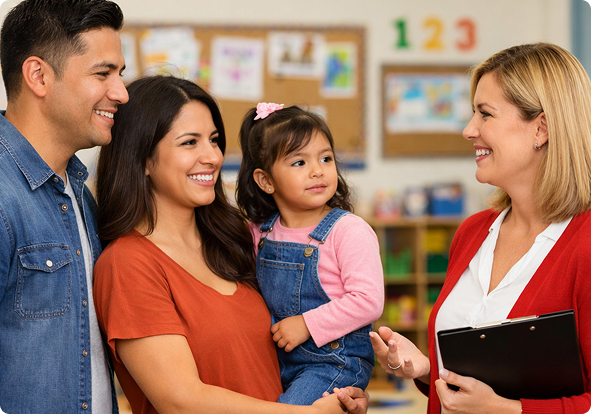
One way to promote your program is adding valuable information to your website, including your philosophy, your curriculum, testimonials from other families, as well as photos and videos. You can also add links to your social media pages for families to browse. Being available for tours and having open house events is another way to actively recruit. Through these visits, families observe how teachers engage with children, whether classrooms feel welcoming and joyful, and how effectively the school communicates and shows evidence of learning. These experiences play an important role in shaping families’ perceptions of program quality and their enrollment decisions. Sustainable enrollment growth happens when instructional quality, communication, and family experience work together.
Private school leaders will want to reflect on the following questions when planning on how to increase their enrollment.
- What are families asking about most often?
- How are we demonstrating student growth and kindergarten readiness?
- Are we clearly communicating the value of our early learning program?
- Do families have visibility into the classroom experience?
- Are our teachers equipped with the tools and support they need?
These questions will help leaders to be more strategic in their program growth and recruitment of families.
Strong Programs Create Strong Enrollment
Strong early childhood programs contribute to increased enrollment because they build family confidence in a private school’s ability to support children’s success. Families want to see evidence of high-quality learning, strong early literacy instruction, meaningful family partnerships, and preparation for kindergarten and beyond. When schools can demonstrate positive outcomes and provide consistent, high-quality learning experiences, they establish trust with prospective families.
Satisfied families often become advocates for the program, generating positive word-of-mouth referrals that further strengthen enrollment. In today’s competitive educational landscape, family’s testimonials of their positive experiences help schools attract, enroll, and retain families who are seeking the best possible start for their children. When visibility, trust, and instructional quality work together, enrollment growth becomes more sustainable and intentional.
About the Author
Our connected solutions support a stronger program culture.
Frequently Asked Questions
ESAs allow eligible families to use public funds for approved educational expenses, including private school tuition. As more families gain access to school choice options, private schools have greater opportunities to attract new families by clearly demonstrating the value and quality of their early learning programs.
Private schools can stand out by highlighting what families value most, including strong early literacy instruction, kindergarten readiness, family engagement, and evidence of student growth. When schools clearly communicate their approach to supporting children’s development and learning, families are better equipped to make confident enrollment decisions.
Student retention is strengthened when families experience consistent communication, high-quality instruction, and meaningful opportunities to engage with their children’s learning. When schools build trust through strong family partnerships and provide visibility into children’s progress, families are more likely to remain invested in the program over time.